PlatyGuard: Swarm Slayer Guide: Best Builds, Platyguards, Combat Tips, Download Options, and Why This Roguelike Keeps Pulling Players In
If you have been seeing PlatyGuard: Swarm Slayer pop up more often lately, that is not random. This game has hit a pretty sweet spot in the current action-game space: it looks weird in a good way, it has a strong combat identity, it leans hard into replayable run-based progression, and it arrives from ChillyRoom with a pitch that is instantly readable even if you only glance at it for thirty seconds. Official store pages describe it as a 2D action roguelike platformer RPG set in a post-apocalyptic wasteland with biopunk and dark sci-fi flavor, where you fight mutant enemies, learn a parry-and-break combat rhythm, and keep shaping your build run after run through skills, items, and synergies. On Android, it is live on Google Play; on iOS, it is live on the App Store; and it is also playable on Windows through Google Play Games on PC, while a separate Steam page lists a broader PC release window of 2026.
So this guide is going to treat PlatyGuard: Swarm Slayer like an actual player guide, not a rewritten store page. I am going to break down the combat loop, the Platyguards, the build system, the enemy zones, the parry-and-break mechanics, beginner priorities, platform options, beta and launch history, early reviews, and the kind of advanced habits that matter once you stop simply surviving and start trying to dominate runs. The game gives you a lot to play with, but that also means it can feel messy at first. The best way into it is not to memorize everything immediately. It is to understand the core rhythm and let the rest stack on top.
I. Introduction to PlatyGuard: Swarm Slayer
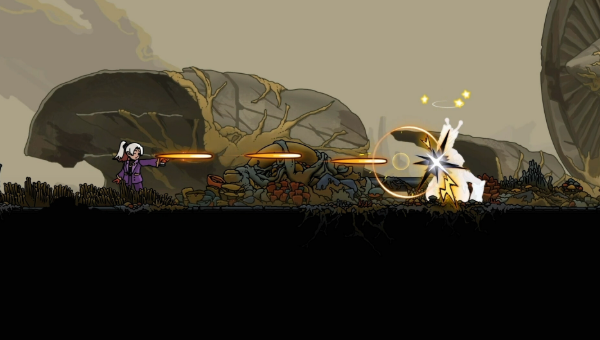
At the most basic level, PlatyGuard: Swarm Slayer is a 2D action roguelike platformer RPG. That exact positioning shows up on Google Play, the App Store, and the Google Play Games on PC listing, and it actually fits the game pretty well because none of those genre labels feel fake here. It is a side-view action game. It is built around repeat runs and randomized power growth. It has platforming movement and room-to-room progression. And it definitely uses RPG-style character differences, persistent upgrades, and build identity. This is one of those games where the crowded genre label is ugly to say out loud but surprisingly accurate once you play.
The setting is just as important as the genre stack. Official descriptions call it a post-apocalyptic wasteland infused with biopunk and dark sci-fi elements, and the story flavor leans into Hive portals, mutant insects, and corporate conspiracies hiding behind the cataclysm. In other words, this is not a clean cyberpunk future and not a purely fantasy apocalypse either. It is more like a dead industrial world where biology and machinery have both gone feral. That gives the art direction and enemy design a distinct identity right away.
The dark sci-fi tone comes through in how the game frames the threat. The official copy does not just say “fight monsters.” It says you are trying to uncover the truth behind the Hive Scourge and survive a world reshaped by something closer to a biological-industrial nightmare than a standard invasion. Pocket Gamer reinforced that tone by describing ruined shelters, plague-ridden zones, mutant horrors, and the feeling that this world clearly used to be somebody’s plan before it collapsed into something much uglier. That kind of texture matters because it makes repeated runs feel less like abstract challenge rooms and more like pieces of a broken world.
As for why the game started pulling search traffic, the timeline explains a lot. The official ChillyRoom beta announcement says the open beta began on October 28, 2025 on Google Play in specific regions including the United States, Canada, Brazil, the United Kingdom, India, Singapore, Malaysia, Australia, New Zealand, and the Philippines, among others. That beta was non-wipe, meaning progress and in-test purchases were intended to carry into launch. Pre-registration was available for global iOS and Google Play outside those beta territories, and the game dangled 10 Summoning Stones for people using the PLATYGUARD code or joining at launch. That is exactly the sort of rollout that generates “download,” “beta,” “code,” and “is it out yet” searches all at once.
Then there is the buildcrafting angle, which I think is the real long-term draw. The store pages do not merely say there are a lot of upgrades. They specifically emphasize hundreds of skills, items, and synergies, and the examples are intentionally flashy: summon armies, cast magic, or rain down lightning storms. That gives the game a much more experimental vibe than a lot of straightforward run-based action games. You are not just hoping for stat increases. You are trying to assemble a machine that plays a certain way. That is why it attracts people who love theorycrafting almost as much as fighting.
From a player’s perspective, the easiest way to summarize the game’s identity is this: PlatyGuard: Swarm Slayer is for people who want mechanical combat, replayable runs, and enough build freedom to make each attempt feel a little different. If you only want pure platforming, it may feel too systems-heavy. If you only want pure number grind, it may feel too demanding. But if you want that middle space where you learn enemy timing, improvise around random rewards, and gradually figure out which combinations let you turn chaos into control, the pitch is strong.
II. Gameplay Overview
The core loop in PlatyGuard: Swarm Slayer is pretty easy to describe even if the runs themselves get messy. You jump into a run, move through a series of combat rooms, fight swarms of mutant enemies tied to the Hive Scourge, collect upgrades that shape your build for that run, defeat bosses for stronger rewards, and eventually either die, win, or learn enough to do better next time. Official copy frames this as hacking and slashing through hordes of enemies, while LDPlayer’s beginner guide makes it even clearer by describing a room-based run structure where your choices define your build as you go.
What makes the loop feel different from a lot of more mindless horde-clearing games is the combat system. The official feature language centers everything around parry, counter, and break. You are meant to spot enemy weaknesses, time your defensive response, shatter defenses, chain combos, and finish enemies with decisive strikes. Pocket Gamer’s early hands-on note adds that you can perform perfectly timed parries and dodges to take out enemies in a single blow, which immediately tells you this is not a button-mashing game pretending to be skillful. The reactive defense is a real pillar.
That combat identity also changes how the game handles aggression. In some action roguelikes, aggression means running forward nonstop and hoping your damage outpaces the room. Here, aggression works best when it is disciplined. The game wants you to learn when to press, when to parry, when to dodge through a threat, and when to wait for a break opportunity. The official tagline “Parry, Counter, Break with Style” is not just flavor text. It really does sound like the intended order of operations. Survive the pressure, flip it back, then cash in.
Run-based progression is where the roguelike layer starts doing the heavy lifting. The official listings say you build your playstyle with hundreds of skills and items, and the beginner guide expands on that by describing rooms that offer temporary power-ups called Talismans. According to that guide, Talismans fall into four trigger families: Power for basic attacks, Agility for using skills, Perception for landing skills, and Constitution for taking damage. That is useful because it shows the game is not just tossing random buffs at you. It is quietly asking what kind of rhythm you want your run to follow.
This means every run becomes a soft build puzzle. Maybe you are building around basic attacks because your Platyguard’s core rhythm is simple and safe. Maybe you are forcing a skill-spam setup because you found the right triggers early. Maybe you are stacking survivability and reactive effects because the run is rough and you need stability more than style. The good roguelike feeling here comes from the same thing that makes the best games in the genre work: the run changes shape based on what you get, but your own habits still matter just as much.
And because the game is built around multiple zones, enemy pools, elites, and bosses, the loop does not seem to rely on one single kind of pressure. The official descriptions say there are 6 vast stages, over 50 enemy types, elite monsters, and formidable bosses, with the battlefield shifting from run to run. So even before you get deep into build theory, the game is trying to create variety through both enemy composition and reward choice. That is the right approach for a run-based game. You want players reacting, not sleepwalking.
III. Characters and Platyguards
One of the first things the game does right is making the cast feel like more than cosmetic skins. Official pages repeatedly say there are over a dozen unique Platyguards, each with its own combat style, and they specifically name very different archetypes: sword duels, brutal combos, charged attacks, and dodge-and-shoot styles. That is a huge deal because in a lot of run-based action games, the character choice matters much less than the item choice. Here, the game is clearly trying to make your hero selection a real gameplay decision.
The broad combat-style buckets are easy to understand. Some Platyguards are built around parry-focused precision, where your value spikes when you can read enemy timing cleanly and punish it. Some are more combo-focused, rewarding players who like staying close, sequencing hits, and turning dazed or broken targets into damage explosions. Others are built around charged attacks, which usually means a little more commitment, a little more planning, and more payoff when you create the opening. The official description adds dodge-and-shoot as another pattern, which matters because it means the game is not only melee-facing. There is room for players who want space control and movement over toe-to-toe trading.
Third-party class-style guides also give us a more practical sense of how individual Platyguards differ. LDCloud’s character guide, for example, describes heroes like Shelly, Lark, Beta, and others in terms of specific stats, break attacks, identity mechanics, and unique skills. Shelly is framed as a fast attacker with crit-oriented bursts and a teleporting break attack that is strong against bosses. Lark is built around speed, marks, and repositioning. Beta is presented as a tankier frontline option with the highest HP in that sample lineup, gunfire-based attacks, and a very straightforward but effective damage pattern. Even if those exact characters do not become everyone’s favorites, the guide makes one thing obvious: the roster is mechanically diverse in a meaningful way.
For beginners, I think the safest picks are whichever Platyguards give you clean attack flow, good room control, and less dependence on perfect execution. The beginner guide on LDPlayer actually recommends sticking with the initial Platyguard at first and focusing on movement and survival rather than trying to jump between complex characters too early. That is smart advice. In games built around parry and reactive defense, the first thing you need is not the flashiest hero. It is one hero you understand well enough to stop panicking.
For more advanced players, the calculus changes. Once you are comfortable with enemy tells, room flow, and build triggers, the more execution-heavy Platyguards start becoming attractive because they convert mastery into bigger returns. A parry-centric character becomes much stronger when you actually trust your timing. A charged-attack specialist becomes much stronger when you know where the safe windows are. A speed-focused combo character becomes much stronger when your movement discipline is good enough to stay in the pocket without throwing the run. That is why a game like this can stay interesting longer than a simpler platformer. The cast is not just for flavor. It is a ladder of mastery.
So if you are just starting, pick a Platyguard that feels readable and forgiving. If you are already comfortable, start asking which character turns your favorite mechanic into a win condition. That is the real difference between “I survive runs” and “I build a main.”
IV. Buildcrafting and Skills
The buildcrafting side of PlatyGuard: Swarm Slayer is one of the biggest reasons the game has stuck in people’s minds. The official pages are unambiguous here: the game offers hundreds of skills and items and encourages you to experiment with synergies that can range from magic barrages to summoned armies to lightning storms. That is not just marketing fluff. Pocket Gamer’s early coverage also singled out the buildcrafting as “the real hook,” describing runs as being held together by a frankly ridiculous number of possible combinations.
One useful thing about the way the game presents build variety is that it is not pretending every upgrade is the same kind of decision. The LDPlayer guide explains that room choices give you Talismans that behave differently depending on what they trigger from. That means the game is quietly asking a structural question every run: do you want your power to come from your basics, your skill usage, your skill hits, or your ability to survive damage? That sort of trigger-based framework is good design because it keeps the run legible even when you are swimming in choices.
The official beta page and store text also mention Summoning Stones, which matter on both the economy and progression side. During beta and pre-registration, ChillyRoom handed out 10 Summoning Stones via code or launch reward messaging, positioning them as a useful early boost. In practice, that tells you the game has some kind of summon- or unlock-oriented meta layer attached to its characters or resources. As a player, I would treat Summoning Stones as something worth hoarding until you understand what the premium or unlock ecosystem actually values most. Early freebies are nice, but wasting them blindly is a classic beginner mistake.
Persistent build progression also matters. The LDPlayer guide mentions several between-run or hub-based systems: Purple Crystals, which you spend after a run; the Prophecy System; and Badge slots, which act as persistent bonuses that can be expanded over time. That is extremely useful context because it tells you the game is not only about in-run growth. You are also building a meta-foundation that makes future runs smoother. In other words, short-term power comes from Talismans and boss rewards, while long-term consistency comes from your account-level progression.
There are also hints of what early “meta builds” look like. The beginner guide specifically suggests prioritizing Power Talismans first because they buff your most reliable damage source, then grabbing Constitution for survivability, and says that this route can carry new players to Plane 4. It also describes a “Feather” strategy unlocked around Plane 4, where the right four-skill combination can create near-infinite skill loops and huge damage through repeated trigger chains. Whether that exact route remains the uncontested best beginner pattern in every patch is another question, but it is a good example of how the game’s systems reward synergy, not just raw stats.
At a higher level, the smartest way to think about builds in PlatyGuard: Swarm Slayer is not “pick strong stuff” but “pick stuff that talks to itself.” A Power-triggered basic-attack build wants a Platyguard who can stay on target safely. A skill-spam loop wants cooldown efficiency and consistent casts. A summon-heavy build wants time and spacing. A lightning or magic build wants enough room control to let those effects matter. The game sells you freedom, but the real fun begins when you stop treating freedom as randomness and start treating it as structure.
V. Enemy Types and Zones
Enemy variety is one of the clearest official strengths of the game. Google Play, the App Store, and the PC listing all say there are over 50 enemy types across 6 vast stages, plus elites and bosses. Pocket Gamer’s Android launch coverage uses the same numbers and adds a little more flavor by describing mutant insects, collapsing bunkers, and strange ruined locations. That is good news because in a game that revolves around repeated runs, enemy variety is not optional. It is one of the main things that keeps repetition from turning into boredom too quickly.
The enemy identity is closely tied to the world’s biopunk disaster theme. Official copy focuses on the Hive Scourge, mutant bugs, and horrors born from a catastrophe linked to human survival instincts and corporate wrongdoing. That combination gives the enemies more flavor than generic zombies or robots. They are part insect plague, part industrial aftermath, part hidden experiment. Even when you are fighting through pure mechanics, the enemy design has a narrative shape behind it.
The six zones also seem designed to create different moods and pressure types. Official store descriptions refer to ruined shelters and plague-ridden zones, while beta and App Store notes later mention Plane 7, a new stage called Origin Grounds, and a new boss called Godshell Worm in pre-release updates. That tells us the zone structure is not just cosmetic scenery. The game is actively expanding and adjusting what each “plane” or stage can offer.
Zone-specific threats matter a lot in a game like this because combat difficulty does not only come from enemy stats. It comes from how rooms, hazards, enemy patterns, and movement space combine. A collapsing bunker zone, for example, implies different room pressure than a plague field full of ranged threats. A worm boss implies different pacing than a humanoid duelist. Even if the game does not always spell out every threat in text, the official framing is enough to suggest that each zone is meant to force different reactions.
Bosses are clearly intended to be major build checkpoints. The beginner guide notes that every boss drops a unique powerful buff, which means bosses are not just “hard rooms with larger health bars.” They are one of the main ways your run gets identity. If you beat a boss and grab a reward that changes how your build functions, that boss becomes a pivot point rather than a gate. Good roguelikes thrive on those pivot points.
As a player, the main thing to understand about enemy and zone variety here is that the game wants your run knowledge to deepen over time. Early on, everything feels like “too many things on screen.” Later, you start to recognize what kind of room you are in, what kind of enemy pressure is coming, what kind of build handles that pressure best, and which zone patterns punish your current weaknesses. That transition from chaos to pattern recognition is one of the most satisfying parts of the game.
VI. Combat Mechanics and Strategy
The combat system in PlatyGuard: Swarm Slayer really lives or dies on one thing: timing. The game’s official identity is built around parry, counter, and break, and the beginner guidance reinforces that by telling new players to focus on learning movement, dashing through attacks, and parrying at the last possible second. This is not the kind of action game where you should expect to coast on aggression forever. The better you get at reading the battlefield, the stronger the entire game feels.
Parrying is especially important because it changes defense into offense. The official descriptions say you should spot enemy weaknesses, parry, dodge, shatter defenses, chain combos, and finish with decisive strikes. Pocket Gamer goes a step further and says perfectly timed parries and dodges can allow single-blow takedowns in some situations. That tells you the game is rewarding precision heavily. It is not asking for defensive patience just to keep you alive. It is asking for it because good defense creates kill windows.
The break system is where that offense peaks. The official wording says you shatter defenses and finish enemies decisively, while third-party character writeups repeatedly refer to Breaking Attacks as major payoffs. For example, LDCloud’s class guide describes several characters with strong break attacks: Shelly teleports onto broken targets, Lark uses a powerful magical break strike, and Beta launches a ranged piercing lightning bomb. So even if the exact UI language around a “point bar” is not spelled out on the store pages, the system clearly revolves around destabilizing an enemy state and cashing it in with a dedicated punish.
From a strategy standpoint, that means the game rewards players who stop seeing enemies as walls of HP and start seeing them as rhythms to interrupt. A projectile-heavy enemy is not just dangerous; it is also a parry opportunity. A rushing melee target is not just pressure; it is also a window if you know the timing. A boss with layered attacks is not simply “hard”; it is a sequence of states where panic gets you killed and patience turns into openings. That is why people who enjoy rhythmic action systems tend to click with games like this much faster.
Managing swarm pressure is the other half of combat strategy. The beginner guide’s advice to prioritize dodging over dealing damage early is not glamorous, but it is exactly right. In a swarm-heavy roguelike, you do not lose because one enemy is strong. You lose because several threats overlap while you are still trying to finish one target greedily. Learning when to disengage, reposition, and thin the room safely matters more than squeezing out a few extra hits. Staying alive longer means more resources, more upgrade choices, and more opportunities to assemble a real build.
So the combat strategy pyramid is basically this: first learn to survive, then learn to parry, then learn to break, then learn to optimize damage around those openings. Too many players try to jump straight to flashy combos and wonder why every run falls apart. The game is telling you the order in its own tagline. The smart move is to listen.
VII. Beginner Guide
If you are brand new to PlatyGuard: Swarm Slayer, the best thing you can do is stop trying to “beat the game” immediately. The strongest piece of beginner advice from the available guides is also the most boring sounding: your first goal is not victory, it is survival long enough to learn. The LDPlayer beginner guide says exactly that, and it is spot on. Runs teach you enemy patterns, item effects, and how different upgrades actually interact. If you treat the first several runs like exams instead of practice, you are going to get frustrated faster than you should.
Your second big beginner priority should be movement mastery. The guide recommends starting with the initial Platyguard, focusing on movement, dashing through attacks, and parrying at the last second for a strong counter. In the early game, dodging correctly is more valuable than forcing damage. That may sound passive, but in this kind of roguelike it is actually the foundation of aggression. A player who survives long enough to collect more upgrades becomes dangerous later in the run. A player who dies stylishly in the first few rooms learns very little.
For early meta progression, the guide’s spending order is also useful. It suggests spending Purple Crystals first on upgrading your main Platyguard, then unlocking the Prophecy System and expanding Badge slots, then prioritizing self-healing gear, and later increasing badge capacity further. That is practical because it favors consistency over novelty. New players love to chase flashy unlocks, but the systems that make every future run sturdier are often more important.
As for in-run decisions, the guide recommends a beginner-safe room path: prioritize Power Talismans first because they boost the most reliable damage source—basic attacks—then follow that with Constitution for survivability. According to the guide, this can carry players to Plane 4 fairly consistently. Even if future updates reshape the exact early-room meta, the underlying principle is strong: when you are learning, build around the part of your toolkit you can execute cleanly, not the part that looks coolest in theory.
A few common beginner mistakes are easy to avoid if you know them upfront. First, do not greed for damage when the room is already chaotic. Second, do not spread your attention across too many Platyguards too early. Third, do not ignore persistent upgrades just because in-run loot feels more exciting. Fourth, do not treat parry as optional. If the game is centered on parry, counter, and break, then skipping that system is like trying to play half the game. You might survive a while, but you are not really learning the right language.
The safest play pattern early on is simple: move first, survive second, attack third, optimize later. That sounds almost too basic, but it is exactly what turns new players into stable players. Once your hands stop panicking, your builds suddenly start making a lot more sense.
VIII. Download and Platform Guide
On Android, the official download route is the Google Play listing. As of the current live page, the game has a 4.7-star rating from 4.28K reviews, is marked Teen, includes ads and in-app purchases, and shows 100K+ downloads. The page also notes an update date of March 19, 2026. That makes Android the clearest and most established live platform right now.
On iOS, the App Store listing shows the game live under ChillyRoom with a 4.3 rating from 33 ratings on the Canadian page that was indexed here, and the listing says the app is free with in-app purchases. The version history is useful because it confirms the rollout timing: versions 1.0.0 and 1.0.1 reference the November 26, 2025 launch, and later updates continue through March 24 with new content and fixes. So yes, iOS support is real and not just a placeholder.
For PC, there are really two separate stories. The first is the live one: Google Play Games on PC supports the game right now on Windows. The official PC page lists minimum requirements including Windows 10 (v2004), an SSD with 10 GB free, 8 GB RAM, a compatible GPU roughly comparable to Intel UHD Graphics 630, 4 physical CPU cores, and hardware virtualization enabled. It also notes seamless sync across devices may apply depending on the game. The second story is Steam, where the game has a store page with a 2026 release window but, as of the indexed page, no user reviews yet. So PC players effectively have an official Windows route now through Google’s platform, while Steam looks like the broader standalone PC rollout still ahead.
On the subject of APKs and alternative downloads, there are third-party pages such as Uptodown-style mobile app catalogs for similar games, and alternative discovery pages certainly exist for this one too. But from a player-safety perspective, the best advice is simple: use the official Play Store or App Store whenever possible. The game already has official distribution on both major mobile platforms, so there is very little upside to taking unnecessary risks unless your region or device specifically forces you to. That is practical advice, not a sourced technical rule.
One other nice detail is that Google Play explicitly marks the game as available on Android and Windows, which makes the cross-device story easy to explain for people who want to play the same mobile ecosystem on a bigger screen. If you are the kind of player who likes grinding on a phone but doing longer sessions on PC, that setup is naturally appealing.
So the platform summary is pretty clean: Android is live, iOS is live, Google Play Games on PC is live, and Steam is listed for a future 2026 release. That is a better spread than a lot of mobile-first action roguelikes get.
IX. Launch, Beta, and Pre-Registration
The rollout history for PlatyGuard: Swarm Slayer is actually one of the easier parts of the game to pin down because ChillyRoom published a fairly explicit beta announcement. On October 28, 2025, the studio announced that both the Open Beta and Pre-Registration were live. The open beta was exclusive to Google Play, limited to a named list of regions, and was described as a non-wipe paid beta, meaning progress and purchases would carry over to official launch. At the same time, pre-registration was open globally on iOS and Google Play outside those beta regions.
That beta also included a small but very on-brand reward push. ChillyRoom told players to use the code PLATYGUARD to claim 10 Summoning Stones before official release, and Pocket Gamer repeated the same information in its “Ahead of the Game” feature. This sort of lightweight reward is exactly the kind of thing that gets shared quickly through community channels because it is simple, useful, and easy to remember.
Then the launch phase started hitting publicly visible platforms in November. Pocket Gamer reported on November 18, 2025 that the game was already out on Android, with iOS still to follow soon. The App Store version history, meanwhile, points to the iOS rollout around November 26, 2025, with versions 1.0.0 and 1.0.1 explicitly referencing that date. So if you saw scattered launch messaging in late November, that is why: Android got the earlier headline, and iOS followed shortly after.
Pre-registration rewards were straightforward too. The official beta page said players who pre-registered would get 10 Summoning Stones to help kick off their adventure at launch. That is not a giant reward package, but it is enough to matter in a game where summoning-related resources clearly connect to character or account progression. It also shows that ChillyRoom was not treating the pre-reg phase as pure marketing fluff. There was an actual launch incentive attached.
First impressions around launch also had a pretty clear tone. Pocket Gamer’s early pieces treated the game as something worth watching because of its combat depth and weirdly charming duck-billed hero angle, while community chatter on Reddit and YouTube tended to compare it to a mix of Dead Cells, survivor-style upgrade picks, and other action roguelike influences. That does not mean everyone agreed on the difficulty or pacing, but it does mean the game arrived with a very recognizable genre identity.
So if you are searching the game because you remember hearing about an open beta, a code, or a region-limited Android rollout, you are not misremembering anything. That really was how the launch unfolded, and it explains why the search history around the game still looks so “beta plus live plus guide” all at once.
X. Reviews and First Impressions
The early conversation around PlatyGuard: Swarm Slayer has been pretty consistent on the game’s main strengths. People notice the combat first. Pocket Gamer’s preview highlighted the way the game mixes hack-and-slash action with perfectly timed parries and dodges, and its later Android launch article doubled down on the idea that every Platyguard fights differently and that the combat has more personality than the generic genre label suggests. That is the sort of praise that matters because it speaks to feel, not just features.
Players also seem to appreciate the style. On the App Store, a sample review highlighted smooth gameplay, strong art direction, and a soundtrack that feels easy to settle into, while official copy and media coverage consistently reinforce the unusual mixture of dark wasteland tone and platypus hero designs. That contrast is part of the game’s charm. It looks grim without becoming visually generic, and it looks cute without becoming unserious.
Replayability is the other major point people keep coming back to. Pocket Gamer’s writeups repeatedly highlight the buildcrafting and the fact that each run can be shaped through a huge number of skills, items, and synergies. The official listings say the battlefield shifts every run and no two fights are the same. That kind of promise only works if the run structure and reward pool stay interesting, but early impressions suggest this is at least one of the things the game gets right often enough to keep people experimenting.
That said, the game has not been free of criticism or technical complaints. The App Store version history documents real post-launch fixes: crash issues, progression problems where characters could get stuck on the same level, a drone activation issue, later reductions in memory usage to lower crash frequency, and map progression fixes. Those patch notes are useful because they show the rough edges were not imaginary. The developers clearly had real stability and flow problems to clean up after release.
There is also a softer criticism around difficulty and pacing. A Reddit impression from the iOS gaming community described the game as fun and likely to do well, but also called it a bit too easy and boring after some play, with another comment wishing for more difficulty options. One anecdotal Reddit thread is not enough to define the whole playerbase, but it does represent a type of reaction action-roguelikes often get: if the early game does not hit hard enough, some experienced players start looking for sharper teeth.
So the honest first-impressions summary is this: people generally seem to like the combat style, the art direction, and the replayable buildcrafting, but the launch period also involved stability fixes and at least some players want tougher or sharper-feeling challenge. That is a pretty believable place for a new live-service roguelike to land.
XI. Advanced Tips and Meta
Once you get past the beginner phase, PlatyGuard: Swarm Slayer becomes much more about converting a good run into a controlled run. At that stage, the smartest habit is to stop choosing upgrades because they sound cool in isolation and start choosing them because they reinforce the exact thing your run already does well. The game is very generous with possibilities, but the strongest runs usually come from commitment, not indecision. That principle is supported by both the official “endless builds” framing and the beginner guide’s emphasis on synergistic loadouts.
For horde clearing, your best Platyguard choices are usually the ones that either control space safely or multiply reliable damage patterns. The beginner guide’s recommendation of a Power-first path already hints at this: builds that turn your baseline attacks into a dependable screen-clearing engine are often easier to stabilize than builds that rely on rare triggers or perfect execution every room. On the more character-specific side, LDCloud’s class notes suggest that Beta is excellent for simple, consistent output and survivability, while a premium gunner-like character such as Nightshade/Nighthawk becomes very efficient once boss talismans like Double Projectile and Refraction start bouncing projectiles around the screen. That sounds exactly like the kind of setup that shreds swarms once assembled.
For bosses, break-focused Platyguards and characters with strong single-target punish windows naturally rise in value. That is where characters like Shelly, whose break attack teleports directly to broken targets for a huge hit, start sounding especially good. Boss fights care less about clearing volume and more about converting the right opening into maximum damage. The same is true for advanced parry-focused characters in general. If your timing is good, bosses stop feeling like sacks of HP and start feeling like scripted opportunities.
In terms of item and skill stacking, the strongest meta habit is to look for feedback loops. The beginner guide’s Plane 4 Feather setup is a perfect example: combine the right room types and effects, and you can create a near-infinite skill-use loop that handles both mobs and bosses. That is what a real “meta build” looks like in this game. Not just high numbers, but a system that keeps feeding itself. If your run has found a loop, your job is to protect it, not dilute it.
Speed-running and high-difficulty survival also follow a very different logic from casual clears. In that context, survivability is still important, but not in the same way. You are not just trying not to die. You are trying to reduce wasted movement, enter rooms with momentum, take fewer unnecessary defensive resets, and choose upgrades that preserve tempo. That is why players who are fast in games like this often look almost reckless from the outside. They are not ignoring defense. They have just internalized the timing enough that their defense is built into their pathing and rhythm.
If I had to give one advanced tip that covers almost everything, it would be this: once your run identity is clear, stop shopping emotionally. Do not grab the fun-looking fire spell in a run that already wants attack-speed basics unless it obviously strengthens that shell. Do not pivot into a damage-taken trigger package if your build is thriving by never getting touched. The game offers tons of freedom, but the strongest players know when to stop exploring and start committing.
XII. FAQ and Search Intent Topics
Is PlatyGuard: Swarm Slayer free to play?
Yes. The Google Play listing and the App Store listing both present the game as free, while also noting the presence of in-app purchases. Google Play additionally labels the game as containing ads.
Does it support Android and iOS?
Yes. The game is live on Android via Google Play and on iOS via the App Store. It is also playable on Windows through Google Play Games on PC, and Steam lists a 2026 release page for an additional PC version.
Is it a roguelike, platformer, or action RPG?
All three, basically. The official listings consistently describe it as a 2D action roguelike platformer RPG, which sounds crowded but accurately reflects the game’s structure: side-view movement, run-based power growth, and character/build progression layered together.
How many characters or Platyguards are there?
Official pages say there are over a dozen unique Platyguards, each with its own mechanics and combat style.
What kind of combat does it use?
The combat centers on parry, counter, break, dodging, combos, charged attacks, and character-specific mechanics. Official copy repeatedly uses “Parry, Counter, Break with Style” as the shorthand for the system.
How many stages and enemy types are there?
The current official store pages say the game features 6 vast stages and over 50 enemy types, plus elites and bosses.
Was there an open beta?
Yes. ChillyRoom’s official announcement says the open beta began on October 28, 2025 on Google Play in select regions, and it was a non-wipe paid beta.
Were there pre-registration rewards?
Yes. The official beta and pre-registration page offered 10 Summoning Stones, and early players could also use the PLATYGUARD code before official release to claim the same amount.
Is it good for beginners?
Yes, but with an important caveat. The beginner guide suggests it is approachable if you focus on survival, movement, and a simple Power-first build path, but the game still expects you to learn timing and not ignore the parry system. So it is beginner-friendly in structure, not totally brainless in execution.
Conclusion
At the end of the day, PlatyGuard: Swarm Slayer stands out because it does not rely on just one gimmick. It is not only selling a strange hero concept, and it is not only selling a dark sci-fi wasteland. It is also selling a real combat identity built around parry, counter, and break, plus the kind of run-based build freedom that gives action roguelikes real staying power. The official pages, the beta announcement, the launch reporting, and the early guides all point in the same direction: this is a game that wants you to survive pressure, learn patterns, and build something nasty enough to push back against the swarm.
So if you are wondering whether PlatyGuard: Swarm Slayer is worth your time, my answer is yes if you like action games where timing matters and buildcrafting matters almost as much. Start simple. Learn to survive. Respect the parry system. Build around what your run already wants to do. And once the game clicks, lean into the weirdness, because this is one of those titles that gets more fun the moment you stop fighting it like a generic action platformer and start treating it like the reactive, build-hungry roguelike it actually is.