The King of Fighters: Why This 3v3 SNK Legend Still Hits Different in 2026
If you’ve ever watched a match where someone gets clipped once, spends half a bar, suddenly pops into MAX Mode, and then your character evaporates in a blur of normals → specials → super… yeah, you’ve probably brushed up against The King of Fighters at some point.
KOF isn’t just “another fighting game series.” It’s SNK’s long-running 3v3 team fighter that started back in 1994, built as a crossover playground for characters from Fatal Fury, Art of Fighting, Psycho Soldier, and then a whole bunch of original KOF weirdos who later became the main event. It’s also the series that taught a lot of us two important life lessons:
Your point character is there to build the vibe.
Your anchor is there to end friendships.
why certain games are “the ones,” what the modern KOF XV competitive ecosystem looks like going into 2026, and how to actually get better without drowning in frame data. I’ll keep it conversational, but I’m still going to be precise where it matters—because KOF is the kind of game where “kinda” gets you exploded.
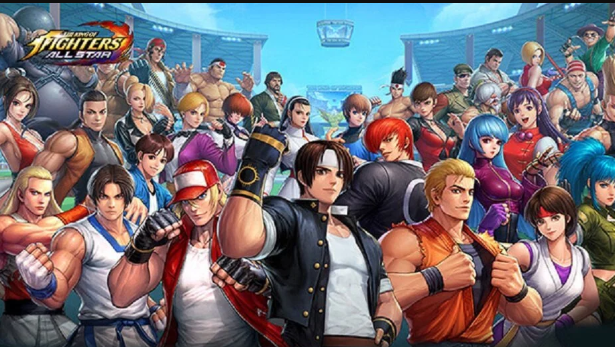
I. The King of Fighters Series Overview
A. SNK’s flagship 3v3 team fighter since 1994
The core identity of The King of Fighters is the 3-on-3 team format. You pick three characters, you decide the order, and you manage resources across the whole squad. That alone creates a totally different mental game compared to 1v1 fighters:
You can run a battery first (build meter safely)
A mid who spends a little to secure momentum
A scary anchor who turns meter into a comeback clip
KOF also bakes in mobility and risk in a way that feels very “SNK”: hops, hyper hops, rolls, guard cancels, and “I swear I blocked that” moments that are honestly part of the charm.
B. A crossover that became its own universe
KOF began as a crossover, but it didn’t stay “guest character party.” Over time, KOF’s original cast—Kyo, Iori, Chizuru, etc.—basically took over the identity of the series, while Fatal Fury/Art of Fighting characters became beloved regulars.
C. From iconic pixel art to modern 3D
KOF’s visual era shifts are part of its history:
Classic 2D sprite identity (the games many people grew up with)
High-water-mark sprite era that fans still worship
The jump into 3D models in modern titles, with SNK continuing to tune visuals and animation readability as the competitive scene grows
Whether you prefer sprites or 3D, KOF’s real “art style” has always been movement + rhythm. It’s a fast conversation between two players, and the game rewards the person who can stay calm while everything looks like chaos.
II. Complete Story Sagas Breakdown
KOF’s story is basically a rotating set of supernatural disasters, conspiracies, and “why is THAT guy back?” moments. The clean way to understand it is by sagas:
A. Orochi Saga (KOF ’94–’97): the mythic foundation
This is where the series really cements its mythos: ancient bloodlines, divine curses, and the whole vibe of “the tournament is not just a tournament.” It’s also where the Kyo vs. Iori rivalry gets its legendary fuel.
B. NESTS Saga (KOF ’99–2002): clones and cartel science
If Orochi is myth, NESTS is sci-fi paranoia: a genetic cartel doing cloning experiments and turning fighters into projects. This saga is where you get the “lab-made” chaos energy that still influences later arcs.
C. Ash Saga (KOF 2003–XIII): power theft and timeline-level drama
This one leans into manipulation and long-game plotting. It’s also the saga that made a lot of players go, “Wait… I kinda like this villain?” which is always dangerous.
D. Verse Saga (KOF XIV–XV): reality gets messy
Modern KOF leans into “the world is cracking open” energy—new protagonists, old characters returning, and a sense that the roster can be anything now. If you like legacy characters showing up with new context, this saga is basically candy.
III. Iconic Main Characters (Player Lens, Not Textbook Lens)
A. Kyo Kusanagi: the face of KOF pressure
Kyo is “KOF fundamentals” in a leather jacket. He teaches you spacing, confirms, and how to bully with normals. The more you play Kyo, the more you realize KOF is a game about winning small moments repeatedly.
B. Iori Yagami: controlled violence
Iori has always felt like the character you pick when you want your opponent to feel stressed. He’s aggression with structure—restarts, pressure loops, and “you thought it was your turn” energy.
C. Terry Bogard: legacy, but still modern
Terry is a walking fighting game handshake. Simple in concept, deep in application, and always relevant because his toolkit fits almost any team plan. Also: yes, yelling your super input is mandatory.
D. Shun’ei: the new-era lead
Shun’ei represents modern KOF’s willingness to explore new power aesthetics and protagonist vibes. Depending on the game/version, he can feel like the “I do a little bit of everything” pick with explosive moments.
IV. Core Gameplay Mechanics (The Stuff You Actually Feel While Playing)
A. 3-on-3 team battles and why order matters
Team order isn’t cosmetic. It’s a strategy layer:
Point: build meter, scout opponent habits, play safer
Mid: stabilize or snowball, spend meter efficiently
Anchor: convert big meter into rounds, force respect
B. Power Gauge and the “SNK decision tax”
KOF constantly asks:
Do you spend meter to secure damage now, or hold it for the next character?
If you’re new, you’ll either:
hoard meter and die with it, or
spend meter on everything and enter anchor with nothing
Learning that balance is the KOF learning curve.
C. MAX Mode, big supers, and momentum shifts
MAX Mode is the series’ “okay, it’s my turn to be scary” button—except it’s also a trap if you pop it at the wrong time. Good players don’t just use MAX Mode; they use it to threaten you into bad decisions.
D. Rolls, guard cancels, hops, and why KOF feels “fast”
Even if you can’t name every mechanic, you feel it:
hops create ambiguous offense
rolls create scramble moments
guard cancels give defense teeth
KOF wants you to stay active, even when you’re blocking.
V. Best Games “Tier List” (Series Entry Points That Still Hold Up)
Here’s the player-friendly truth: “best” depends on what you want.
KOF XV
If you want a modern competitive environment with strong online infrastructure and an active ecosystem, XV is the main stage right now.
KOF XIII
If you want the “sprite art flex” era, XIII is the one people point to as a visual masterpiece—also a game that rewards lab time.
KOF ’98
This is the classic “dream match” vibe: pure fighting game comfort food. It’s still a community staple because it’s just… KOF at its most “KOF.”
KOF XIV
The big 3D transition moment. If you like seeing how the modern identity formed, XIV is a fascinating stop—especially if you enjoy roster variety.
(And yes, people will argue about this forever. That’s how you know the series matters.)
VI. KOF XV in 2026: Competitive Reality Check
A. The tournament scene is serious
SNK is pushing major competitive infrastructure in 2026: SNK World Championship 2026 qualifiers kick off worldwide on January 29, 2026, and the total prize pool is over $4.1 million.
That kind of money changes the vibe. More grinders show up. More regions take it seriously. More “hidden boss” players crawl out of matchmaking.
B. Crossplay matters (and it’s here)
KOF XV’s cross-play update launched June 20, 2023, which matters because it increases the player pool and makes practice less platform-gated.
In practical terms: more matches, less waiting, stronger online competition.
C. “S-tier” in KOF is always skill-shaped
You’ll hear community talk about characters like Kyo, Iori, Terry, Shun’ei as perennial threats. But KOF is brutally honest: an “A-tier” piloted by someone who actually understands hop pressure and safe confirms will ruin a lazy “top tier” player.
So if you’re reading this hoping for a magic character pick: sorry. KOF doesn’t work like that. It rewards execution + decision-making more than most mainstream fighters.
VII. Beginner Combo Training (Stuff That Actually Helps)
Here’s the cheat code: don’t start by learning “optimal.” Start by learning repeatable.
A. Build three things first
A light confirm you can do under pressure
A punish combo for obvious mistakes
A corner route that keeps the opponent there
If you can do those three reliably, you’ll climb faster than someone who knows a 40% combo but drops it every time.
B. Practice habits that matter more than big damage
Confirm off safe hits, not random swings
Learn one anti-air option and commit to it
Learn what your character does after a knockdown (your “turn plan”)
KOF is a game of turn structure. The better you are at deciding what happens after you win a hit, the more you start feeling in control.
VIII. Esports and Majors (Why KOF Still Has That “Arcade Soul”)
KOF has always been community-driven, and even with modern esports polish, it still feels like a game where:
locals matter
rivalries matter
regions have distinct styles
And with the SNK World Championship 2026 money on the line, expect the level of play to keep climbing fast.
IX. Full Roster Highlights (The “Teams You Recognize” Effect)
One of KOF’s greatest strengths is that it can be both:
a legacy character museum
and a living competitive platform
So you’ll see iconic clusters like:
Japan team vibes (Kyo and friends)
Fatal Fury staples (Terry, etc.)
Women Fighters energy (Mai, King, Yuri, etc.)
Even if your roster knowledge is shallow, KOF makes it fun to learn because you’re constantly running into “Ohhhh THAT’S where this character comes from.”
X. Boss Characters and Villains (The “KOF Is Extra” Department)
KOF bosses are basically a genre inside the genre—flashy, unfair, iconic. Even if you don’t care about story, boss characters are part of KOF’s identity because they represent the series’ love for:
over-the-top power
dramatic music
“good luck blocking this” moves
They’re not always balanced for normal competitive play (depending on the entry), but they’re absolutely part of why KOF feels like KOF.
XI. Where to Play in 2026 (Player Practicality)
If you want the modern main stage: KOF XV is the obvious pick, especially with crossplay in the ecosystem.
If you want the “classic learning dojo”: older entries still have strong communities through collections, ports, and legacy platforms—just be prepared for more niche matchmaking depending on what you choose.
XII. KOF vs Other Fighters (Why It Feels So Different)
Vs Street Fighter
Street Fighter often feels like “control space, win neutral, cash out.”
KOF feels like “control space… then hop at them from the sky like a gremlin.”
Vs Tekken
Tekken is deep movement + long-term matchup knowledge.
KOF is faster decision loops and more explosive momentum swings.
Vs Guilty Gear
Guilty Gear can be loud, stylish, and system-heavy.
KOF is quieter—but it’s sharp. It punishes sloppy choices instantly.
XIII. Community Resources (How Players Actually Improve)
If you want to improve fast, do what KOF players have always done:
watch tournament VODs
steal one setup at a time
run sets with someone slightly better than you
ask one specific question instead of “how do I get good”
KOF is an “apprenticeship” game. You learn by playing humans and getting corrected repeatedly.
XIV. Mobile and Spin-offs (A Quick Reality Check)
There are mobile and spin-off KOF titles that lean into gacha, arena formats, or idle systems. They can be fun on their own terms, but they’re not replacements for mainline KOF if what you want is the 3v3 fighting game identity.
Think of them as “KOF-flavored side dishes,” not the core meal.
The King of Fighters endures because it offers something most fighters don’t at the same intensity: a 3v3 format where team order, meter economy, and momentum feel like a strategic sport, but the moment-to-moment gameplay still rewards raw hands and brave reads.
If you’re brand-new, the best way to approach KOF is simple:
pick three characters you actually enjoy looking at and playing
learn a stable gameplan (not optimal combos)
focus on anti-airing and confirming lights
play sets, not random matches
accept that getting cooked is part of the process
And if you’re coming back in 2026 because the scene looks active again—yeah, it is. With SNK World Championship 2026 qualifiers starting January 29, 2026 and a prize pool over $4.1 million, the competition is only getting sharper.
KOF isn’t about finding one “best” character. It’s about building a team you trust—then learning how to make your opponent regret giving you even one opening.