Genshin Impact — A Player’s Big, Honest Tour of Teyvat (Why It Still Eats Your Free Time in 2025)
If you’ve somehow avoided it until now, Genshin Impact is that free-to-play open-world action RPG where you blink, do “one quick commission,” and suddenly it’s 2 a.m. The hook is simple and dangerously effective: you explore a gorgeous fantasy world called Teyvat, swap between characters mid-fight like you’re DJ’ing a combat mixtape, and melt/freeze/electrocute everything using an elemental reaction system that feels like it was built to make you say “okay one more run.” It launched globally on September 28, 2020, and the fact that it’s still dominating conversations years later tells you the live-service machine is very much alive.
What keeps me coming back isn’t just the gacha dopamine (though yeah, the wishing animation still hits). It’s that Genshin is basically three games stitched into one: an exploration game with puzzle-y vibes, a team-building RPG where your roster grows into a toolbox, and a story-driven world tour that keeps expanding with new regions, new mechanics, and new characters that inevitably make your “I’m saving Primogems this time” promise fall apart.
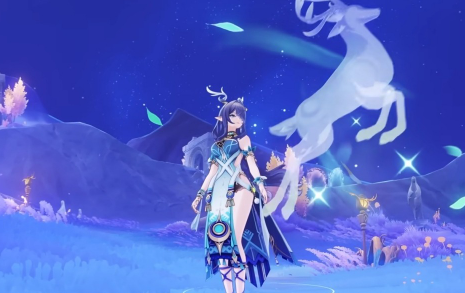
I. INTRODUCTION & GAME OVERVIEW
Genshin Impact is free-to-play and built around a rotating update cycle that adds regions, quests, limited events, and banners (aka the wish system). “Action RPG” here means real-time combat — you dodge, you aim, you time bursts — but the secret sauce is the four-character party. You’re not just “one hero,” you’re a whole squad, and you swap in combat constantly to apply elements, set up reactions, and chain buffs.
If I had to describe the core gameplay loop in one sentence: explore → get resources → build characters → clear harder fights → explore more. The loop is clean, and the world is designed to make “just walking around” feel rewarding. Even in older regions, you’ll find hidden chests, strange mechanisms that react to elements, and little bits of lore tucked in places you didn’t expect.
The business model is gacha, yes — limited banners, featured characters, pity, etc. But the game also gives you a ton of content without paying. In practice, spending mainly changes how fast you collect specific characters/weapons, not whether you can play the story or explore the map.
II. TEYVAT WORLD & SEVEN NATIONS SYSTEM
Teyvat is structured like a fantasy travel map where each nation has its own vibe, architecture, music identity, and narrative themes. Even if you don’t care about lore, the regional design is strong enough that you’ll remember your “first time” moments: stepping into Mondstadt and hearing that airy theme, climbing Liyue cliffs and seeing the harbor glow at night, the mood shift when you reach Inazuma, and the feeling of Fontaine being both elegant and slightly unsettling.
Each nation is tied to an element and an Archon (a god-like figure). The storytelling style is basically: you arrive as an outsider, you get dragged into local political drama, you meet a cast of characters who are either immediately lovable or immediately suspicious, and then the plot escalates into something bigger than the nation itself.
Over time, Genshin keeps pointing you toward larger mysteries: Celestia hanging above everything like a silent threat, the ruins and history that the world clearly doesn’t want to talk about, and the long-term “where is my sibling?” mainline that keeps colliding with bigger factions.
III. SEVEN ELEMENTAL SYSTEMS & COMBAT MECHANICS
This is the part that makes Genshin combat feel different from “hit enemy until it dies.” The seven elements aren’t just colors — they’re a system. You apply an element, swap, apply another, and you trigger a reaction. And reactions range from “nice damage bump” to “this is the whole team archetype.”
How it feels in real play:
Anemo (Wind) is your “vacuum and blender” element. Swirl spreads elements and turns messy fights into controlled fights.
Geo (Earth) is comfort food: shields, stability, and that “I refuse to be interrupted” energy.
Pyro (Fire) is the classic damage vibe, especially when paired for big multipliers.
Hydro (Water) is the glue element — it enables freeze teams, vaporize teams, bloom teams, and a ton of utility.
Cryo (Ice) is control and consistency. Freeze teams are basically “no, you don’t get to move.”
Electro (Electricity) is chaos in the best way: chain effects, big bursts, and a huge role in modern reaction teams.
Dendro (Plants) changed the meta by adding new reaction families that reward quick swapping and off-field application.
The two combat buttons that define every character are the Elemental Skill (cooldown ability) and the Elemental Burst (ultimate, energy-based). The “real” skill expression in Genshin isn’t perfect dodging — it’s rotation planning. Knowing when to burst, when to funnel energy, and when to refresh buffs is what turns a team from “fine” into “oh wow, everything exploded.”
IV. CHARACTER ROSTER & RECRUITMENT SYSTEM
Genshin’s roster is enormous now — easily over 100 playable characters — and that changes how you should think about collecting. You’re not hunting “the one best character.” You’re building a toolbox.
Characters generally fall into roles:
Main DPS (the one on-field doing most damage)
Sub-DPS (off-field damage, quick swap damage, reaction enablers)
Supports (buffers, debuffers, crowd control, shielding)
Healers (obviously, but many also enable reactions or buffs)
The gacha system is “Wishing,” powered by Primogems. The key psychological trap is banners: limited characters come and go, and the game loves placing a perfect upgrade right after you’ve emptied your savings. If you want to be sane, you plan around team needs, not hype.
V. PLAYABLE CHARACTER CATEGORIES & TIERS
Let me say the quiet part out loud: tier lists in Genshin are contextual. Some characters are “always good,” but most characters become monsters when paired correctly.
In player terms, there are a few kinds of “top tier”:
Universal enablers — characters that make many teams better just by existing (crowd control, massive buffs, consistent off-field element application).
Hypercarry kings/queens — characters who want the whole team built around them.
Account comfort picks — shields/heals/utility that make exploration and bosses dramatically easier.
Budget legends — 4-stars that punch way above their rarity and basically carry accounts for months.
If you’re new, don’t stress about “S-tier.” Stress about having:
one reliable damage dealer,
one reliable sustain (shield or heal),
and one reliable enabler (reaction support or buff support).
That combo clears way more than people think.
VI. TEAM COMPOSITION & META ARCHETYPES
Most strong teams in 2025 still follow simple skeletons:
Hypercarry: one main DPS + three units that feed them buffs/energy/survival.
Reaction driver: one character applies element fast, others trigger big reactions.
Quick-swap: everyone takes turns nuking; no one hogs field time.
Classic team “feel” examples:
Freeze feels safe and clean. You control the pace.
Vaporize/Melt feels like setting up a big punch. Timing matters.
Dendro reaction teams feel like a machine: apply, trigger, swap, repeat.
If you ever feel stuck, it’s usually not because your account is doomed — it’s because your team has a missing job. No battery, no healer, no consistent application, no resistance shred… something like that.
VII. MAIN CHARACTERS & STORY ROLES
You play as the Traveler, and the story is fundamentally about identity, memory, and power systems that pretend they’re “order.” Your sibling isn’t just missing — they’re involved in forces that change how you interpret every region’s “local drama.”
And then there’s Paimon, who is basically your floating chaos narrator. Some players love her, some players want a “Paimon volume slider.” But she’s undeniably part of the game’s identity.
The Archons and major factions are the narrative pillars. Even if you skip dialogue (no judgment), the story does a good job of making certain characters feel important — like the world actually pivots around them.
VIII. EXPLORATION & WORLD DESIGN
Exploration is where Genshin still wins. Climbing, gliding, swimming, and puzzle solving are designed around stamina and element interactions. The map is full of “micro-rewards”: chests, oculi, world quests that start from random NPCs, and hidden areas that feel like the devs are winking at you.
The best part? Exploration teams are flexible. You’ll eventually build “comfort squads” for traveling: movement skills, stamina reduction, easy healing, and something to deal with random enemies without sweating.
IX. COMBAT SYSTEMS & DIFFICULTY PROGRESSION
The difficulty curve is mostly governed by Adventure Rank and World Level. Early on, you feel like a god. Then you hit that moment where enemies suddenly feel tanky and you realize, “Oh, I’m supposed to level talents, weapons, and artifacts, not just character level.”
The “true” endgame test is Spiral Abyss, where you need two teams and you’re on a timer. Abyss doesn’t ask “can you survive?” as much as “can you execute rotations and meet damage checks?”
And honestly, Abyss is optional. Some players treat it like a monthly exam; others ignore it and enjoy the world. Both are valid.
X. PROGRESSION SYSTEMS & RESOURCE ECONOMY
Progression in Genshin is a resource management game wearing an anime coat.
Your main upgrade pillars are:
Character Level + Ascension
Weapon Level + Ascension
Talents (often the most underrated early power spike)
Artifacts (the late-game grind everyone argues about)
Artifacts are where people either become spreadsheet demons or embrace chaos. My honest advice: don’t start min-maxing artifacts too early. Get correct main stats first, then worry about substats later.
Also: Resin is the pacing throttle. The game wants you to log in daily, do a little, and log out. If you try to brute-force grind, Resin is the wall you slam into.
XI. STORY & QUESTS FRAMEWORK
Genshin content comes in layers:
Archon Quests = main story
Story Quests = character-focused arcs
World Quests = exploration lore, often surprisingly deep
Events = limited-time stories and rewards
Hangouts = branching, cozy character time
Some of the best lore is hidden in world quests and optional chains. If you like storytelling, don’t skip those — they’re often where the world feels most alive.
XII. MONETIZATION & GACHA MECHANICS
Here’s the player reality: the gacha is polished, tempting, and designed to make you rationalize pulls. The pity system helps, but it doesn’t remove the emotional rollercoaster.
If you’re free-to-play or light spender, your best move is to treat wishes like planning a build, not like impulse shopping. Pull for characters that complete teams, not characters that look cool (unless “looking cool” is your endgame — also valid).
XIII. REGIONAL CHARACTER DEPTH & FLAVOR
One reason the roster doesn’t feel purely “quantity over quality” is that many characters are tied tightly to region identity. Their clothes, names, kits, and stories usually match the nation themes. Even when people argue about representation or design choices, it’s clear the devs put effort into making regions feel distinct.
Also, voice acting across multiple languages adds a lot. Sometimes a character lands differently depending on which VO you use — it’s genuinely worth sampling.
XIV. SPECIAL GAME MODES & SIDE CONTENT
Genshin has quietly become a theme park.
Genius Invokation TCG exists for players who want a totally different strategy game inside Genshin.
Serenitea Pot is for builders and decorators.
Rotating combat modes and seasonal challenges show up depending on the patch.
The big thing is: you can engage with side content as much or as little as you want. The game doesn’t hard-force you into every mode.
XV. TECHNICAL SPECIFICATIONS & DEVELOPMENT
On a technical level, Genshin’s big flex is that it scales across devices while still looking good. On PC/console you can push visuals and performance; on mobile it’s a balancing act. The fact that the same open world can run on phones at all is kind of wild.
And on the “platform expansion” front, the Xbox arrival gave a lot of players a new on-ramp — especially those who didn’t want to commit to PC or mobile controls.
XVI. CRITICAL RECEPTION & CULTURAL IMPACT
Even if you don’t follow gaming news, you’ve felt Genshin’s cultural footprint: cosplay, memes, fan music, fan art, endless lore videos, “F2P challenge” accounts, and characters trending every time a drip marketing post drops.
The game also gets criticized — mostly for gacha pressure, pacing systems like Resin, and the fact that endgame combat content doesn’t always expand as fast as the character roster does. Both praise and criticism can be true at the same time. That’s kind of the Genshin experience in a nutshell.
XVII. CONTROVERSIES & CONTENT CONCERNS
No long-running global game avoids controversy. Genshin has had recurring conversations around monetization ethics, account security concerns in its early life, and region-specific censorship differences. As a player, the practical takeaway is simple: protect your account, don’t overspend chasing hype, and understand that global and regional versions of large live-service games can differ in policy and content rules.
XVIII. COLLABORATIONS & CROSSOVERS
Genshin collaborations tend to be “world meets brand” rather than huge gameplay shakeups. They’re usually cosmetic, promotional, or community-facing, but they feed the sense that Genshin is less a single game and more a living franchise.
XIX. FUTURE ROADMAP & ONGOING DEVELOPMENT
By late 2025, the patch cycle still looks like a machine: new story arcs, new regions, and new characters introduced with suspiciously perfect timing right when you think you can finally relax and farm artifacts in peace. There’s also been a lot of buzz around the next major arc after Version 5.8, with teasers pointing toward a new explorable storyline direction.
As a player, I’ve learned the healthiest approach is:
plan pulls around your teams,
accept that you can’t own everything,
and treat new regions as a buffet, not a checklist.
XX. PLAYER COMMUNITY & ENGAGEMENT STRATEGIES
The community is half the fun and half the noise.
If you want a better time:
use communities for team-building and rotation help, not for doomposting,
remember that “meta” is different depending on whether you care about Abyss timers or just exploring,
and don’t let anyone shame you for liking a character.
Genshin is a game where your “favorite” can absolutely be viable with the right build and team — and honestly, that’s one reason it keeps its charm even after years.
Genshin Impact is still the rare live-service game that feels like a real world worth living in: a massive open map with strong art direction, a combat system that rewards smart team building, and a steady stream of story and characters that keeps the community moving. It launched in 2020, it’s expanded aggressively ever since, and it’s now available across major ecosystems — including Xbox Series X|S — which makes it easier than ever to jump in (or come back).
If you’re new, my player advice is simple: explore first, build a small core roster well, don’t panic-pull, and let the game unfold at your pace. If you’re returning, don’t try to “catch up” in one week — pick a region, pick a team, and enjoy the rediscovery. Teyvat rewards curiosity more than urgency, and that’s exactly why it’s still hard to quit.